Bampton C.E.Primary School
Our Teaching
Early Years Foundation Stage – Nursery & Reception
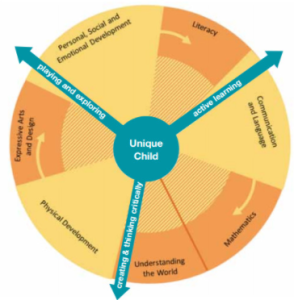
The four guiding principles which shape the practice in our early years settings are:
- every child is a unique child, who is constantly learning and can be resilient, capable, confident and self-assured
- children learn to be strong and independent through positive relationships
- children learn and develop well in enabling environments with teaching and support from adults, who respond to their individual interests and needs and help them to build their learning over time. Children benefit from a strong partnership between practitioners and parents and/or carers.
- importance of learning and development. Children develop and learn at different rates. (See “the characteristics of effective teaching and learning” at paragraph 1.15). The framework covers the education and care of all children in early years provision, including children with special educational needs and disabilities (SEND).
The areas of learning and development:
There are seven areas of learning and development that must shape educational programmes in early years settings. All areas of learning and development are important and inter-connected.
Three areas are particularly important for building a foundation for igniting children’s curiosity and enthusiasm for learning, forming relationships and thriving.
These are the prime areas:
- communication and language
- physical development
- personal, social and emotional development
Providers must also support children in four specific areas, through which the three prime areas are strengthened and applied.
The specific areas are:
- literacy
- mathematics
- understanding the world
- expressive arts and design
In planning, staff consider the individual needs, interests, and stage of development of each child in their care, and use this information to plan a challenging and enjoyable experience for each child in all of the areas of learning and development. Staff working with children in nursery focus strongly on the three prime areas, which are the basis for successful learning in the other four specific areas. The three prime areas reflect the key skills and capacities all children need to develop and learn effectively, and become ready for school. The balance shifts towards a more equal focus on all areas of learning as children grow in confidence and ability within the three prime areas.
Each area of learning and development is implemented through planned, purposeful play and through a mix of adult-led and child-initiated activity. Play is essential for children’s development, building their confidence as they learn to explore, to think about problems, and relate to others. Children learn by leading their own play, and by taking part in play which is guided by adults. There is a positive focus on playful learning taking place both inside and outside.
In planning and guiding children’s activities, staff reflect on the different ways that children learn and reflect these in their practice.
Three characteristics of effective teaching and learning are:
- playing and exploring – children investigate and experience things, and ‘have a go’
- active learning – children concentrate and keep on trying if they encounter difficulties, and enjoy achievements
- creating and thinking critically – children have and develop their own ideas, make links between ideas, and develop strategies for doing things
Staff use their knowledge of the children to plan a balance between activities led by children, and activities led or guided by adults. Staff respond to each child’s emerging needs and interests, guiding their development through warm, positive interaction. As children grow older, and as their development allows, the balance gradually shifts towards more activities led by adults, to help children prepare for more formal learning, ready for Year 1.
Useful Link: